How to choose
Choosing clothes and shoes that survive the first year
Four checks you can make in two minutes: the fibre label, the seams, the sole construction and fabric recovery. They predict year two better than price does.
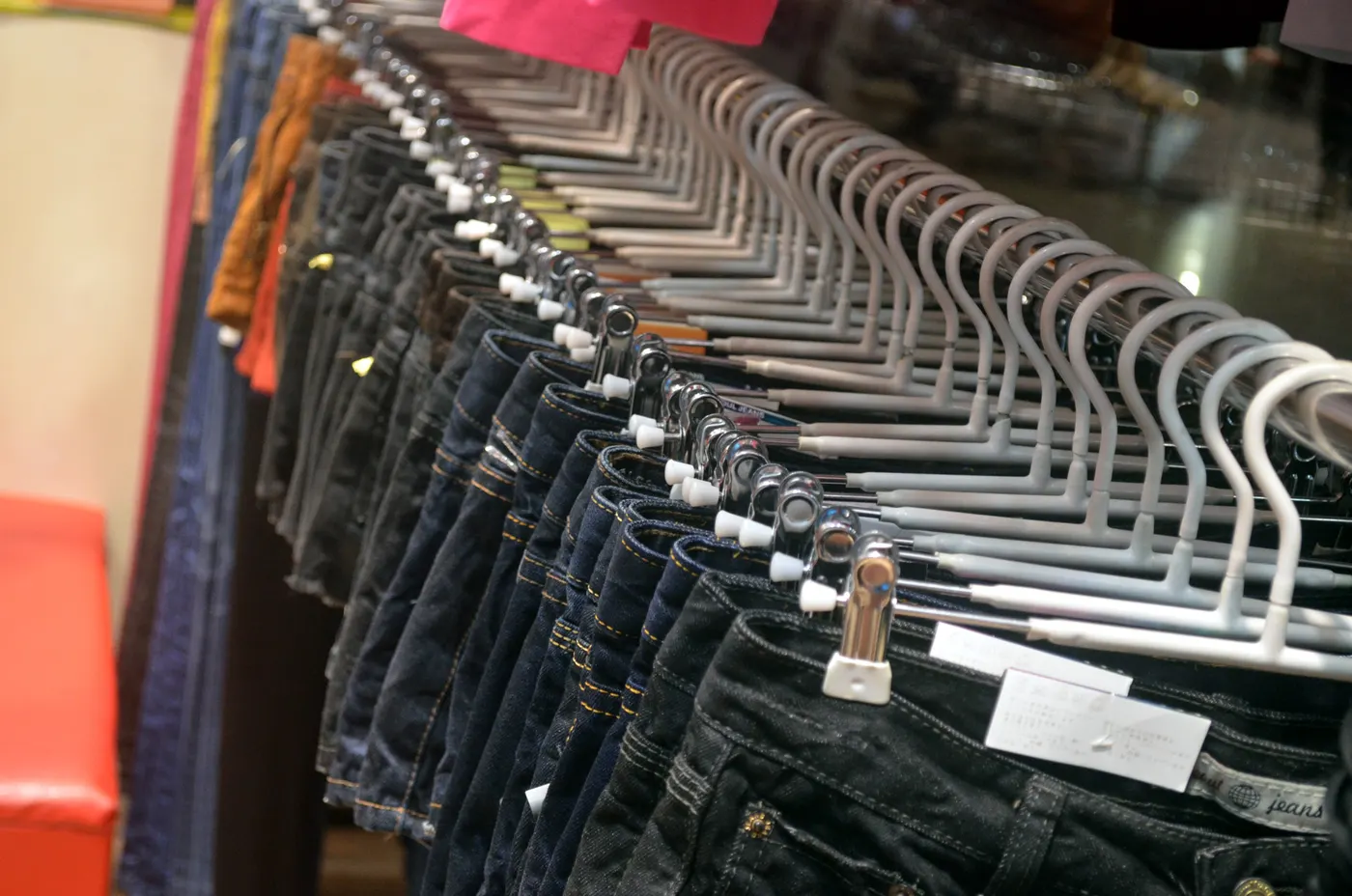
Most of what decides whether a garment is still worn next winter is visible in a shop in under two minutes, and none of it is the price. It is the fibre composition on the label, the width of the seam allowance inside, how the sole is attached to the shoe, and whether the fabric returns to shape when you let go of it.
This guide walks those four checks, explains what the label is legally required to tell you, and finishes with the arithmetic that turns them into money. Nothing here has been tested or worn by us, and there are no brand recommendations; the rules quoted come from the Federal Trade Commission's own published guidance.
The label is a legal document, so read it first
Under the Federal Trade Commission's guidance on the Textile and Wool Acts, a textile product label must give three things: the fibre content by generic name in descending order of weight with percentages, the manufacturer or dealer identity or its registered identification number, and the country where the product was processed or manufactured.
The fibre rule has a threshold that explains most confusing labels. Fibres making up 5 percent or more of the weight are named with their percentage; anything under 5 percent is grouped as other fibre or other fibres. There are exceptions: wool and recycled wool must always be named whatever the proportion, and a fibre with definite functional significance can be named below the threshold, which is why 4 percent spandex appears by name on stretch denim.
Use the rule as a filter. A coat reading 80 percent wool, 20 percent polyamide has told you its whole composition. A coat reading wool blend has told you nothing, because wool blend is compatible with a garment that is mostly something else. The percentage is the fact; the adjective is marketing.
| Required on the label | The rule | What to do with it |
|---|---|---|
| Fibre content | Generic names in descending order by weight, with percentages | Compare two garments only when both give percentages |
| Fibres at 5 percent or more | Must be named with the percentage | This is the whole composition, not a summary |
| Fibres under 5 percent | Grouped as other fibre, unless functional | A named 4 percent spandex is a deliberate stretch choice |
| Wool and recycled wool | Always named, whatever the percentage | A wool figure is never hidden in other fibres |
| Manufacturer identity | Full business name or RN number | Lets you find care documentation later |
| Country of origin | Where it was processed or manufactured | Relevant to the duty arithmetic in the budget guide |
Three checks with your hands
Turn the garment inside out and look at the seam allowance. A wide allowance means the seam can be let out or repaired and that the fabric is not already at the edge of its weave; a narrow allowance of a few millimetres on a stretchy knit is where seams split first. Overlocked edges with no allowance behind them are the construction that fails earliest.
Squeeze a handful of the fabric and let go. Wool, good viscose blends and well-made cotton recover quickly. A fabric that holds the crease is a fabric that will hold the sitting-down crease across the back of a skirt for the whole day, and that is a garment people stop wearing long before it wears out.
On shoes, look at where the sole meets the upper. A stitched sole can be replaced by a cobbler, which doubles the life of the shoe for the price of the resole. A sole bonded on with adhesive and no visible stitching cannot be, and when it separates the shoe is finished. That single difference is worth more than anything else you can see on a shoe in a shop.
- Read the fibre percentages before the price tag
- Turn it inside out and check the seam allowance is wide enough to repair
- Squeeze the fabric in your fist for 5 seconds and see whether the crease falls out
- Check whether a shoe sole is stitched or only bonded
- Look at the lining at the heel of a shoe, because that is where wear shows first
- Check button and zip quality, since both are cheap to replace and expensive to live without
What the care label does and does not cover
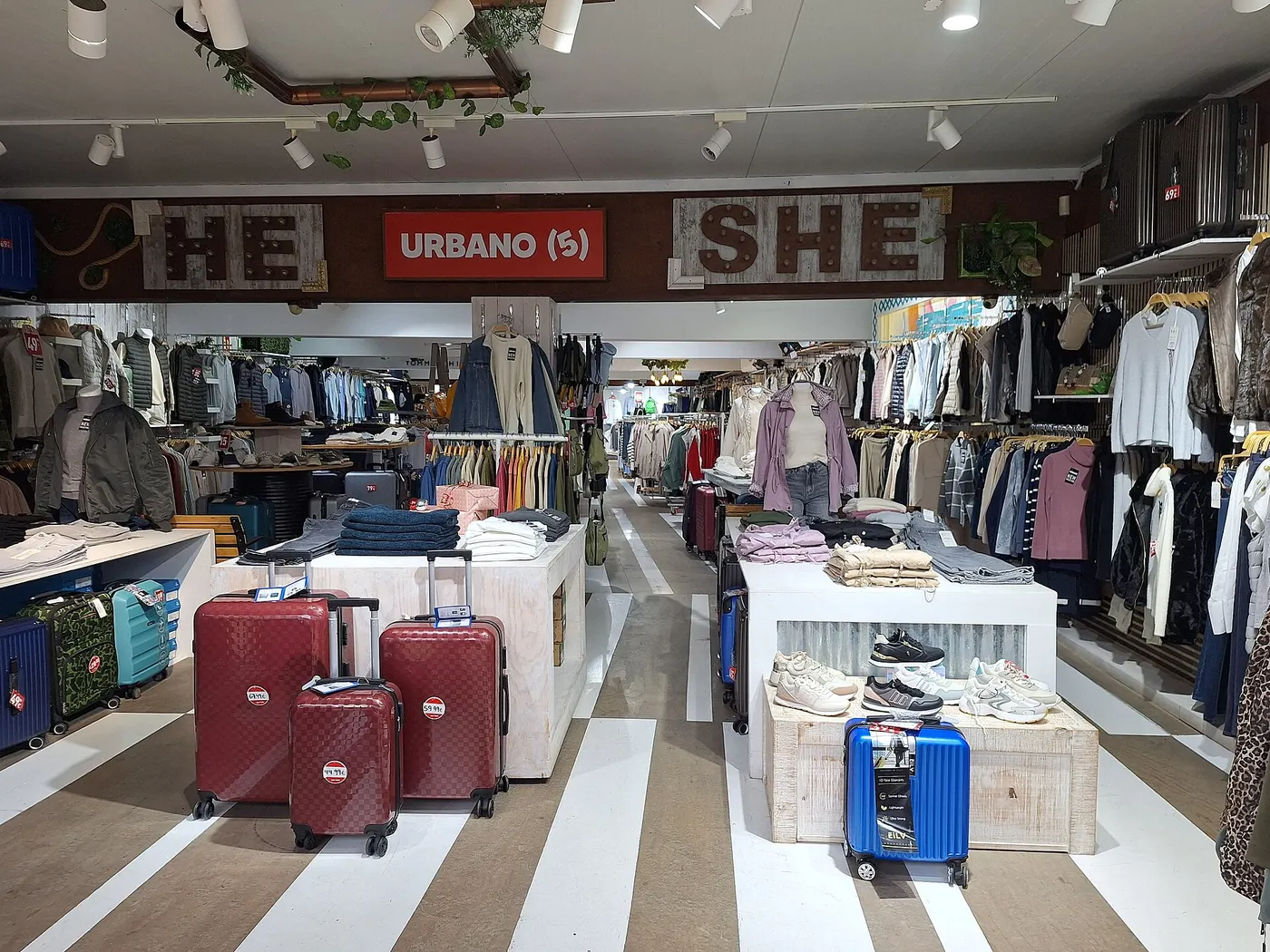
The FTC's Care Labeling Rule requires manufacturers and importers to attach care instructions to textile apparel worn on the body and to piece goods sold for home sewing. The label has to cover washing method, water temperature where hot water would damage the garment, bleaching, drying method and temperature, ironing, and warnings about anything that would harm the item, such as do not iron or wash with like colours.
The exemptions are the useful part. Shoes, gloves, hats, handkerchiefs, belts, neckties, non-woven single-use garments and hosiery are all outside the rule. That is why a pair of leather pumps arrives with no care label at all and why the only care documentation for footwear is whatever the maker chooses to publish, which is a reason to look for it on the manufacturer's site before buying rather than after.
There is also a quality signal inside the rule. Manufacturers need reliable evidence to support the care instructions they print, whether from industry expertise or from test results. A label with a specific, confident instruction set has been through that process; a label that says dry clean only on a plain cotton shirt is more often a way of avoiding the evidence requirement than a property of the fabric.
| Item | Covered by the Care Labeling Rule | What that means in a shop |
|---|---|---|
| Coats, dresses, knitwear, trousers | Yes | A full care label is required and should be specific |
| Piece goods for home sewing | Yes | Care information travels with the fabric |
| Shoes | No | Expect no care label; look for maker documentation online |
| Gloves, hats, belts, neckties | No | Same as shoes |
| Hosiery | No, but temporary labels are required | Care information may be on the packaging only |
| Bed linen and household textiles | No | Any care label present is voluntary |

Turning the four checks into money
A garment that passes all four checks gets worn more times, and the number of wears is the denominator in every cost comparison worth making. A $240 wool coat worn 30 times a winter for 3 winters is worn 90 times and costs about $2.67 a wear. An $80 coat that loses its shape after one winter and 20 wears costs $4.00 a wear, half the price and half again the cost.
Shoes make the point even more sharply, because the stitched sole is the difference between one life and two. A $160 pair of leather pumps worn 40 times before the sole goes is $4.00 a wear. The same pair resoled once at $55 and worn 40 more times is $215 over 80 wears, about $2.69 a wear, which is cheaper than a $45 pair that is finished after 12 wears at $3.75.
This is why the four checks are worth two minutes. They do not tell you whether something is beautiful or whether you will like it, and nothing on this page is a judgement of either. They tell you which of two price tags is actually the larger number once the wears are counted, and the budget guide on this site works that arithmetic through in full.
Before you buy
- Read the fibre percentages and reject anything that gives only an adjective
- Check that wool, if claimed, is named with a percentage
- Turn the garment inside out and measure the seam allowance with your fingers
- Crush a handful of fabric for 5 seconds and watch whether the crease falls out
- Check whether the shoe sole is stitched or only bonded
- Look for the maker's own care page for footwear, which carries no required label
- Estimate your own number of wears a year before comparing any two prices
Questions readers ask
- Does a higher price mean better construction?
- Not reliably, which is why the four checks exist. Seam allowance, fibre percentage, sole attachment and fabric recovery are all visible in a shop at any price point, and they predict the second year far better than the tier does. Price does correlate with one thing: the likelihood that a repair is worth paying for.
- Why do some shoes have no care label at all?
- Because footwear is exempt from the FTC's Care Labeling Rule, along with gloves, hats, belts and neckties. A shoe with no care label has not broken a rule. The practical response is to look for the maker's own care page before buying, especially for suede, patent and anything with a bonded sole.
- What does a label reading cotton blend actually tell me?
- Very little, because it gives no percentage. Under the Textile Act guidance, fibres at 5 percent or more must be named with their percentage in descending order of weight. A label that names a fibre without a number has skipped the part that lets you compare it with anything else.
- Is a stitched sole worth paying more for?
- On the arithmetic above, yes. A $160 stitched pair resoled once at $55 covers 80 wears at about $2.69 each, where the same pair unresoled covers 40 at $4.00. The resole only makes sense if the upper is still good, which is why the lining at the heel is one of the four checks.
- How many wears should I expect from a coat?
- Count rather than guess: a coat worn 5 days a week for the 12 coldest weeks is about 60 wears a winter, and one worn at weekends is nearer 24. Both are legitimate; what matters is that you use your own number as the denominator rather than an assumed one.
Sources
Some links on this site can earn us a commission. That does not change which product a guide recommends, and it adds nothing to your price. Advertising is not enabled on this site yet. When it is, ads will be labelled and kept visually separate from the guides.